


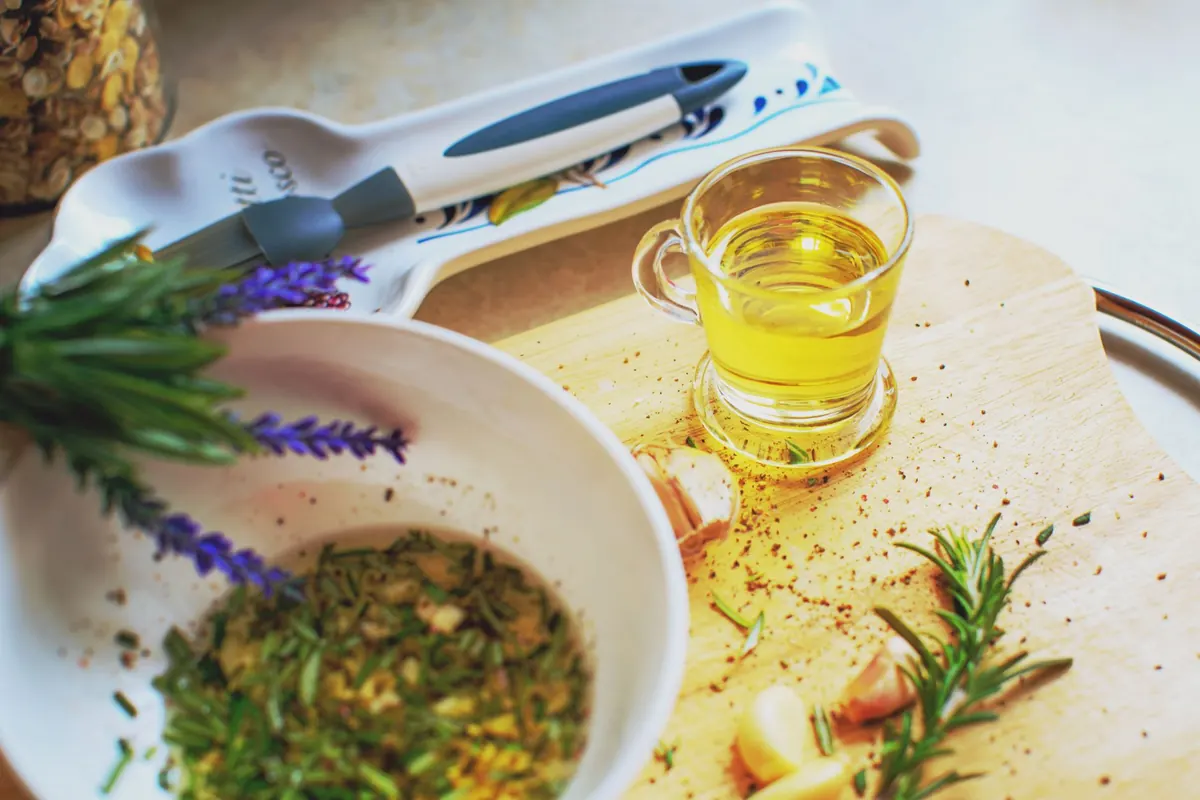


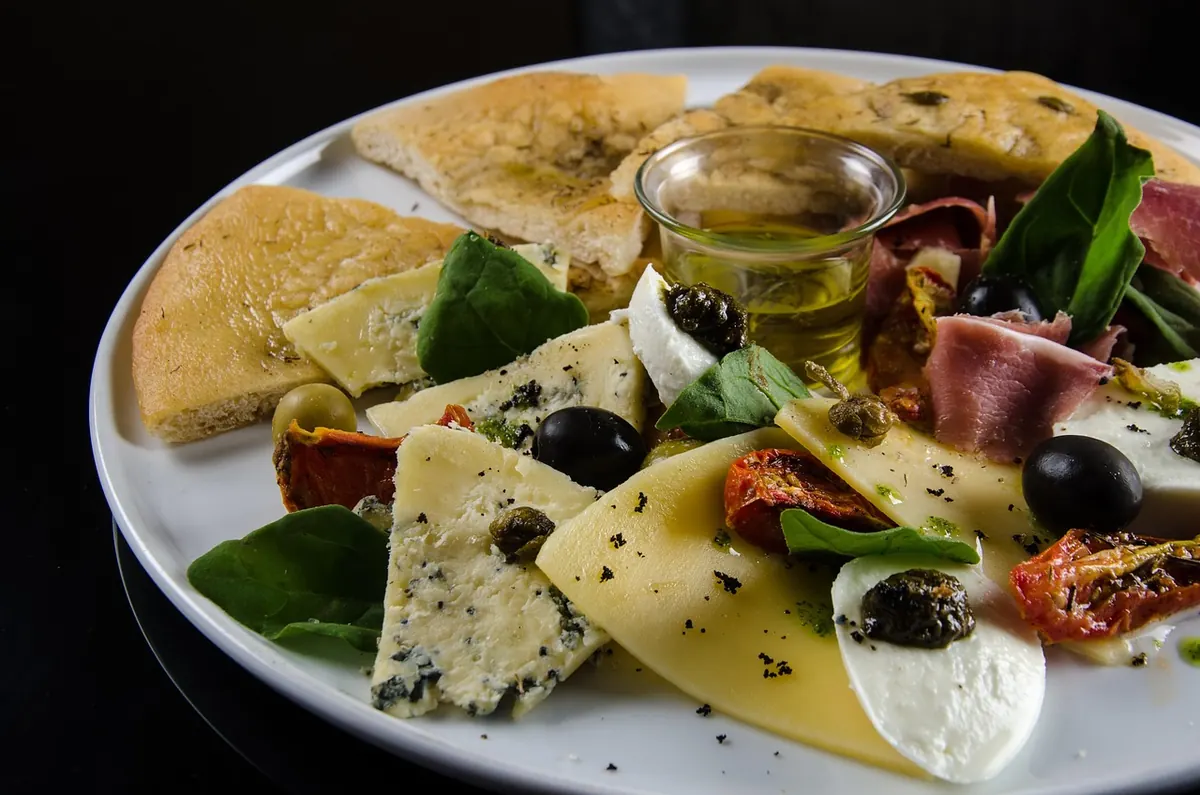
You can learn more about olive oil with a spoon, a glass and five quiet minutes than from a year of squinting at labels in the supermarket aisle. Most of us only ever taste the stuff as a background note — a drizzle over tomatoes, a gloss on a salad — so a tired, flat oil and a bright, peppery one can seem almost interchangeable. Tasting oil on its own changes that. It isn't a formal skill, it needs no special equipment, and once you can tell the difference, you shop far more confidently.
Before you taste: kit and conditions
Tasting olive oil is closer to tasting wine than to cooking. You want a clean palate, a warm oil and nothing competing with it.
- A small, clean glass. A stemmed tulip shape is ideal; a shot glass does the job.
- Oil at room temperature. Cold dulls aroma badly.
- Slices of plain apple, a piece of bread and a glass of water to reset your palate between oils.
- Two or three oils to compare. One bottle on its own tells you very little.
- A pen and paper, or a notes app, so you don't rely on memory.
Pour less than you think
A tablespoon is plenty. Cup the glass in your hand, cover it with a saucer or your palm and leave it for a minute. Your body heat releases the aromas gently. Don't warm it in a pan — that's cooking, not tasting.
Smell first, and take your time
Lift the cover and put your nose right into the glass. Breathe in slowly, pause, then breathe again. First impressions tend to be honest ones.
Notes to look for
Fresh, green things: cut grass, tomato leaf, artichoke, green apple, herbs, sometimes a soft nutty or buttery note from riper fruit. You're looking for something lively, like a vegetable garden after rain.
Notes that mean trouble
Musty damp cardboard, wet wool, crayon, stale nuts, putty, or a sherry-like sharpness. Oils like this are usually old, badly stored, or made from poor fruit. "Nothing much at all" is its own kind of fault: a bland oil is rarely a fresh one.
Slurp properly — the noise is the point
This is the step that feels ridiculous and does most of the work.
- Take a small sip — about half a teaspoon — and hold it at the front of your mouth.
- Purse your lips and draw air in over the oil in short, sharp bursts, as if you were trying to whistle and breathe at the same time. The oil sprays across your tongue and its aromas travel to the back of your nose.
- Chew it gently, sucking it through your teeth two or three times, then swallow or spit.
The cough is information, not a problem. If an oil makes you clear your throat, it is telling you it is fresh.
What you're assessing
Three things, in order. Fruitiness, at the front of your mouth. Bitterness, usually mid-palate, a green tonic-like edge. Pungency, the peppery catch at the back of the throat. All three point to fresh oil, and the last two especially. A bitter, peppery oil is not faulty; it is often the best bottle on the shelf.
Wait for the finish
Swallow, or spit into a cup, then do nothing for ten seconds. The finish tells you as much as the first sip. A good oil fades slowly, leaving warmth in the throat and a clean green taste. A poor one vanishes at once, or leaves a greasy, slightly stale coating. Ask one question: do I want another sip? If yes, you're onto something.
Taste two or three side by side
Comparison is where the learning happens. Put three oils in front of you and the differences stop being theoretical.
- Choose a theme — two supermarket own-label extra virgins against one single-origin bottle, or a mild oil against a robust one.
- Code the glasses so you can't see which is which. A number on a scrap of paper under each glass works well.
- Taste in the same order, using the same method every time.
- Write three words only: one for aroma, one for taste, one for the finish. "Grassy, bitter, long." "Flat, oily, short."
- Reset between oils with a bite of apple, a piece of bread and a sip of water.
- Then check the labels and see whether your favourite was the one you expected.
Do this a few times and your vocabulary grows on its own. You stop saying "nice" and start saying "green and peppery, but it fades quickly".
Reading British supermarket labels
- Extra virgin should be the top grade: extracted by mechanical means, with no refined oil blended in. If it tastes of nothing, the label is doing more work than the contents.
- Virgin is a step below, still unrefined, usually with more noticeable faults.
- "Olive oil", "mild", "classic" or "light" usually means a blend of refined oil with some virgin oil. Fine for roasting, deliberately neutral in flavour. "Light" refers to taste, not to calories.
- Dates. A best-before two years out tells you less than a harvest or pressed-on date. Recent is better.
- Origin. "Produced in Spain" or "Produced in Greece" says something about the fruit; "bottled in" only describes where the packaging happened. A named region or estate is a useful clue, not a guarantee.
- Packaging. Dark glass, tins and small bottles protect oil. Clear plastic sitting in the light does not.
Buy the smallest bottle you'll get through in a few months. Olive oil is a fresh product and it fades in the cupboard, so store it closed, cool and dark, away from the hob, and finish one bottle before opening the next. If you're changing your diet for a medical reason, ask your GP or a registered dietitian rather than taking advice from a label.
Make it a habit
A tasting doesn't need a flight of glasses or a notebook. Once a week, when you open a bottle, pour half a teaspoon, warm it in your hand, smell, slurp, and decide whether you'd buy it again. Save the name in your phone if it's a keeper. Then use that oil on something plain — a slice of bread, a boiled potato, a tomato — where you can taste the oil itself rather than the dressing around it.
The first few times, you may feel as though you're making it up. That passes quickly. You'll start noticing which bottles taste of something and which taste of almost nothing, and the weekly shop gets simpler. Cost of entry: one spoonful.
Photo: 8664447 / Pixabay